Blog
Cataract Symptoms: When Is It Time for Surgery?

Cataracts are one of the most common causes of vision problems as people age. They develop when the normally clear lens inside the eye becomes cloudy, gradually making it harder to see clearly. Cataracts usually develop slowly, so many people don’t notice the early changes at first.
Recognizing cataract symptoms can help you understand when a routine vision change may require an eye examination. Early symptoms can be subtle, while more advanced cataracts may interfere with reading, driving, recognizing faces, working, or performing everyday activities.
A common question is whether everyone with a cataract needs surgery. The answer is no. Cataract surgery is generally considered when the clouding of the lens causes enough vision impairment to interfere with a person’s daily activities or quality of life. The decision should be made with an ophthalmologist after a comprehensive eye examination.
At Search Orbis, our goal is to provide accessible health information that helps readers understand common eye conditions and make informed decisions about professional care. This guide explains common symptoms, how cataracts progress, available treatment approaches, and when surgery may become appropriate.
Medical note: This article is for educational purposes and does not replace an examination by an ophthalmologist or other qualified eye-care professional. Sudden vision loss, severe eye pain, flashes, or a sudden increase in floaters requires urgent medical assessment because these symptoms may have causes other than cataracts.
What Is a Cataract?
Understanding the Clouding of the Eye’s Lens
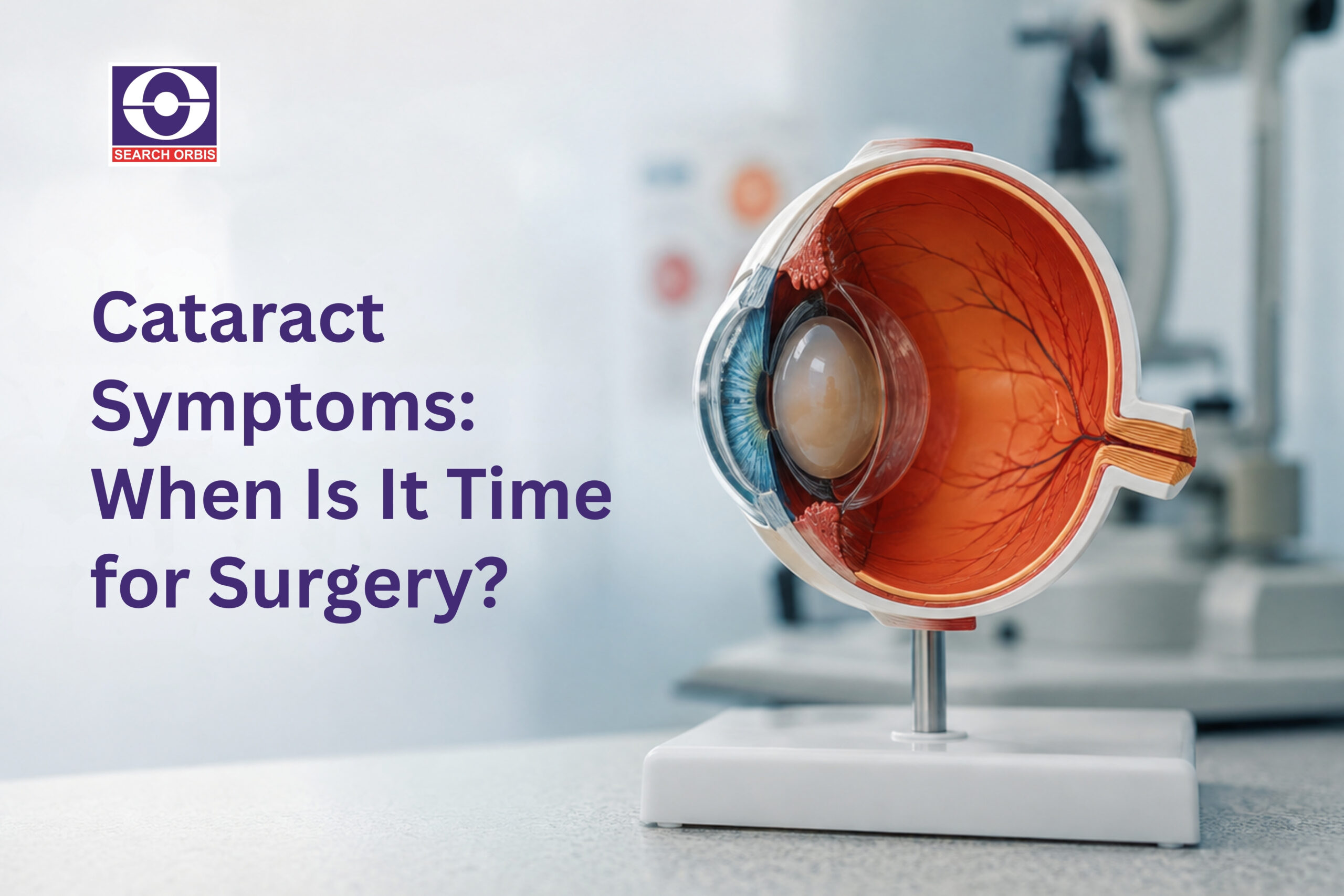
A cataract occurs when proteins and other structures within the eye’s natural lens become less transparent. Instead of allowing light to pass through clearly, the lens gradually becomes cloudy.
The lens sits behind the iris and helps focus light onto the retina. When the lens becomes opaque, the image reaching the retina can become less sharp.
Cataracts can develop in one eye or both eyes. They may progress at different rates in each eye.
Common types include:
- Age-related cataracts
- Nuclear cataracts
- Cortical cataracts
- Posterior subcapsular cataracts
- Cataracts associated with injury or certain medical conditions
- Congenital cataracts
The type and location of lens clouding can influence the symptoms a person experiences.
Why Cataracts Usually Develop Gradually
Age is a major risk factor, but cataracts aren’t simply an unavoidable part of getting older. Other factors can contribute to lens changes.
These may include:
- Diabetes
- Smoking
- Long-term exposure to ultraviolet light
- Certain medications, including prolonged corticosteroid use
- Previous eye injuries
- Previous eye surgery
- Certain medical conditions
Because cataracts generally develop slowly, regular eye examinations can help identify lens changes before they significantly affect daily life.
Early Signs of Cataract
Subtle Changes You May Notice
The early signs of cataract can be easy to overlook.
At first, you might notice that your vision isn’t quite as sharp as it used to be. You may need brighter light to read or find yourself increasing the size of text on a phone or computer.
Other early changes can include:
- Mild blurring
- Increased sensitivity to bright light
- Difficulty seeing in dim conditions
- More difficulty reading
- Reduced contrast
- Frequent changes in glasses prescription
These symptoms don’t automatically mean you have a cataract. Refractive errors, dry eye, retinal disorders, glaucoma and other conditions can cause similar complaints.
A comprehensive eye examination is therefore important when vision changes persist.
Why Early Changes Can Be Difficult to Recognize
The brain can sometimes adapt to gradual changes in vision. If one eye develops a cataract more quickly than the other, the stronger eye may compensate for the affected eye.
As a result, someone may not realize how much their vision has changed.
Family members may notice that a person is:
- Holding reading material closer
- Turning on more lights
- Avoiding night driving
- Increasing screen font size
- Struggling to recognize people from a distance
These observations can be useful reasons to schedule an eye examination.
Common Cataract Vision Symptoms
Blurred or Cloudy Vision
One of the most recognizable changes is vision that gradually becomes less clear.
People may describe their sight as:
- Hazy
- Foggy
- Cloudy
- Blurred
- Less sharp than before
The effect can vary depending on the location and severity of the lens opacity.
Importantly, cataracts generally don’t cause sudden loss of vision. If vision suddenly becomes severely blurred or disappears, seek urgent medical attention rather than assuming it is a cataract.
Increased Glare and Light Sensitivity
Bright lights can become uncomfortable as a cataract progresses.
You may notice:
- Headlights appearing unusually bright
- Difficulty driving at night
- Glare around lamps
- Halos around lights
- Discomfort in bright sunlight
Night driving can become particularly difficult because headlights from oncoming vehicles may create distracting glare.
If this affects driving safety, discuss your symptoms with an eye specialist and consider limiting night driving until your vision has been assessed.

Signs of Cataracts That Can Affect Daily Life
Difficulty Reading and Working
As lens clouding increases, everyday tasks may become more challenging.
You may struggle with:
- Reading small print
- Using a computer
- Sewing or crafts
- Cooking
- Recognizing faces
- Watching television
- Working in low light
Sometimes stronger glasses or improved lighting can temporarily make these tasks easier. However, if vision remains inadequate despite these measures, an ophthalmologist can assess whether the cataract has become significant enough to consider surgery.
Problems With Night Vision
Reduced ability to see in low-light conditions is another common concern.
A person may notice that they need significantly more light to navigate a room or feel less confident walking outside after dark.
Night vision difficulties can be especially important for people who drive for work or travel frequently after sunset.
Because several eye conditions can affect night vision, an examination is necessary to determine the underlying cause.
Cataract Progression
How Cataracts Change Over Time
Cataract progression varies from person to person. Some cataracts remain relatively stable for years, while others gradually become more visually significant.
The rate of progression can depend on:
- Age
- Cataract type
- Diabetes
- Smoking
- Medication exposure
- Previous eye trauma
- Individual biological factors
There is no universal timeline that determines when a cataract will require surgery.
Monitoring Changes in Vision
Regular eye examinations allow an ophthalmologist to monitor lens changes and assess whether vision is being affected.
During follow-up, your doctor may evaluate:
- Visual acuity
- Lens clarity
- Eye pressure
- Retina and optic nerve health
- Overall eye health
This is important because not every decline in vision is caused by a cataract. Conditions affecting the retina, optic nerve, cornea, or macula can also reduce vision.
A comprehensive assessment helps identify the actual cause.
Symptoms of Cataracts in Adults
Common Changes With Age
The symptoms of cataracts in adults can vary considerably. Some people experience gradual blurring, while others mainly notice glare, color changes, or difficulty seeing at night.
Potential symptoms include:
- Gradually reduced clarity
- Faded or yellowish colors
- Increased glare
- Difficulty seeing in dim light
- Frequent prescription changes
- Double vision in one eye
- Reduced contrast
Not every adult with these symptoms has cataracts. A professional examination is the best way to determine the cause.
When Vision Changes Should Be Checked
Don’t wait for vision to become severely impaired before arranging an eye examination.
Consider scheduling an appointment if:
- Your vision is progressively worsening.
- You are struggling to read despite updated glasses.
- Night driving has become difficult.
- Bright lights cause significant glare.
- Your daily activities are becoming harder.
- Your prescription seems to change frequently.
Early assessment can also identify other eye conditions that may require treatment.
What Increases the Risk of Developing Cataracts?
Age Is a Major Risk Factor
Cataracts are strongly associated with aging because the proteins within the natural lens can gradually change over time. However, age alone doesn’t determine how quickly a cataract develops or how much it will affect vision.
Some older adults may have mild lens clouding with little effect on daily activities, while others may experience significant visual impairment.
Regular eye examinations are therefore more useful than relying on age alone to determine whether treatment is necessary.
Other Factors That Can Affect Cataract Development
Several factors may increase the likelihood of developing cataracts or contribute to faster progression.
These include:
- Diabetes
- Smoking
- Prolonged ultraviolet exposure
- Long-term corticosteroid use
- Previous eye trauma
- Certain medical conditions
- Previous eye surgery
Protective habits, such as wearing sunglasses that provide appropriate UV protection and managing conditions such as diabetes, can support overall eye health.
However, these measures cannot guarantee that cataracts will never develop.
When Is Cataract Surgery Needed?
Vision and Quality of Life Matter Most
Many people ask, when is cataract surgery needed?
Surgery is generally considered when the cataract causes enough vision loss to interfere with everyday activities or quality of life.
There isn’t a specific visual-acuity number that automatically means everyone needs surgery. Two people with similar eye-test results may make different decisions based on their lifestyle and visual needs.
For example, surgery may become appropriate when someone has increasing difficulty with:
- Driving
- Reading
- Working
- Cooking
- Walking safely
- Recognizing faces
- Enjoying hobbies
- Managing household tasks
The decision should be made jointly with an ophthalmologist after a comprehensive assessment.
You Don’t Have to Wait Until You Lose Most of Your Vision
Older advice sometimes suggested waiting until a cataract was “ripe” before having an operation. Modern cataract care generally doesn’t require waiting for a cataract to become extremely advanced.
If vision is significantly affecting your quality of life, your ophthalmologist can discuss whether the potential benefits of surgery outweigh the risks.
The right timing is individualized.
Factors such as your lifestyle, occupation, general health, visual requirements, and other eye conditions may all influence the decision.
When to Get Cataract Surgery
Signs That Surgery May Be Worth Discussing
A conversation about surgery may be appropriate when you find that corrective glasses or improved lighting are no longer enough.
For example:
- You cannot read comfortably even with appropriate glasses.
- Night driving has become unsafe.
- Glare makes everyday activities difficult.
- Your hobbies have become frustrating.
- Your work performance is affected.
- You frequently avoid activities because of poor vision.
These changes don’t automatically mean surgery is required, but they provide useful information for your ophthalmologist.
The Decision Is Personal
There is no single date or age at which everyone should undergo cataract surgery.
Someone who works at night may be affected earlier by glare than someone who rarely drives after sunset. Similarly, a person who enjoys detailed crafts may notice limitations sooner than someone whose activities require less visual precision.
The key question is:
Is the cataract affecting your ability to live the life you want to live?
Your eye specialist can help answer that question through examination, visual testing, and discussion of your daily needs.
How Is Cataract Surgery Recommended?
A Comprehensive Eye Examination Comes First
Before recommending surgery, an ophthalmologist evaluates more than the lens itself.
The assessment may include:
- Visual acuity testing
- Refraction
- Slit-lamp examination
- Eye pressure measurement
- Retinal examination
- Corneal assessment
- Measurement of the eye for the replacement lens
The doctor also asks about your symptoms and how they affect everyday activities.
This helps determine whether the cataract is actually responsible for your vision problems.
Other Eye Conditions Must Be Considered
Vision loss can have multiple causes.
For example, a person may have both cataracts and:
- Glaucoma
- Macular degeneration
- Diabetic eye disease
- Corneal disease
- Retinal problems
Removing a cataract can improve the portion of vision affected by lens clouding, but it cannot necessarily reverse damage caused by another eye condition.
This is why realistic expectations are an important part of surgical planning.
Cataract Treatment Before Surgery
Can Glasses Treat Cataracts?
In the early stages, updated glasses or better lighting may improve visual function.
However, glasses cannot remove the cloudy natural lens.
As the cataract becomes more significant, changing prescriptions may provide less benefit.
If vision remains inadequate despite appropriate glasses, an ophthalmologist can discuss whether surgery should be considered.
Lifestyle Measures and Eye Protection
There is no proven eye drop or home remedy that can reverse an established cataract.
However, general measures can support eye health.
These include:
- Protecting your eyes from excessive UV exposure
- Avoiding smoking
- Managing diabetes
- Eating a balanced diet
- Wearing appropriate eye protection during hazardous activities
- Attending regular eye examinations
These habits are useful for overall eye health but should not be presented as a substitute for professional cataract care.
What Happens During Cataract Surgery?
Replacing the Cloudy Natural Lens
Modern cataract surgery usually involves removing the cloudy natural lens and replacing it with an artificial intraocular lens, commonly called an IOL.
The procedure is generally performed using local or topical anesthesia, depending on the patient’s circumstances and the surgical setting.
The surgeon makes a small opening in the eye, removes the cloudy lens and places the selected artificial lens in its position.
The specific technique and lens choice depend on individual eye measurements and medical needs.
Choosing an Intraocular Lens
Different types of IOLs are available.
Depending on your circumstances, an ophthalmologist may discuss options designed to provide:
- Clear distance vision
- Improved intermediate vision
- Improved near vision
- Astigmatism correction
- Different ranges of focus
No lens guarantees perfect vision at every distance.
The best option depends on your eye health, lifestyle, expectations, and the recommendations of your ophthalmologist.

What Happens If You Delay Surgery?
Mild Cataracts Often Don’t Require Immediate Surgery
If a cataract causes only minor visual changes and doesn’t interfere with daily life, surgery may not be necessary right away.
Your doctor may recommend monitoring the condition during routine examinations.
There is generally no need to undergo surgery simply because a cataract has been detected.
The decision should be based primarily on how much the cataract affects vision and daily functioning.
Advanced Vision Loss Can Affect Safety
When cataracts become more advanced, reduced vision may affect independence and safety.
Potential concerns include:
- Difficulty driving
- Increased risk of falls
- Problems navigating unfamiliar places
- Difficulty reading medication labels
- Trouble recognizing faces
- Reduced ability to perform work tasks
If these problems develop, discuss them with your eye specialist.
In some cases, cataract removal can significantly improve functional vision.
Understanding Cataract Surgery Symptoms
Normal Changes After Surgery
People sometimes search for cataract surgery symptoms when they notice changes after an operation.
Some temporary symptoms can occur during recovery, including:
- Mild irritation
- Watery eyes
- Light sensitivity
- Mild discomfort
- Temporary blurry vision
Your surgical team should provide specific postoperative instructions because recovery varies between individuals.
Symptoms That Need Prompt Medical Attention
Certain symptoms after eye surgery should not be ignored.
Contact your eye-care team promptly if you experience:
- Increasing rather than improving pain
- Significant redness
- Sudden deterioration of vision
- New flashes or a large increase in floaters
- Severe light sensitivity
- Discharge from the eye
Your surgeon should tell you exactly what symptoms require urgent attention after your procedure.
What to Expect After Cataract Surgery
Vision May Improve Gradually
After surgery, many patients notice clearer vision as the eye heals. However, the speed of recovery varies.
You may initially experience:
- Mild blurring
- Light sensitivity
- Watery eyes
- A sensation of something in the eye
- Changes in color perception
Your ophthalmologist will provide postoperative instructions and schedule follow-up visits to monitor healing.
Don’t compare your recovery directly with another person’s. Individual healing depends on eye health, surgical factors, and other medical conditions.
Follow Your Postoperative Instructions
After surgery, protecting the healing eye is important.
Your doctor may recommend:
- Using prescribed eye drops
- Avoiding rubbing the eye
- Wearing protective eyewear when advised
- Following activity restrictions
- Attending scheduled follow-up appointments
Never stop or change prescribed postoperative medication without discussing it with your eye-care professional.
If you experience sudden or severe changes in vision, significant pain, increasing redness, or other concerning symptoms, contact your surgical team promptly.
What Are the Benefits and Risks of Cataract Surgery?
Potential Benefits
For people whose cataracts significantly affect their vision, surgery can provide substantial improvement.
Potential benefits include:
- Clearer vision
- Better ability to read
- Improved ability to recognize faces
- Greater confidence with everyday activities
- Better vision in appropriate lighting
- Improved quality of life
The degree of improvement depends partly on whether other eye conditions are present.
Understanding Potential Risks
Although modern cataract surgery is generally highly successful, it is still an operation and carries potential risks.
Possible complications can include:
- Infection
- Inflammation
- Retinal problems
- Changes in eye pressure
- Swelling
- Posterior capsule opacification
- Rarely, significant vision loss
Your ophthalmologist should explain the potential benefits and risks based on your individual circumstances before surgery.
Frequently Asked Questions About Cataracts
Q: 1. What are the first symptoms of a cataract?
Early symptoms can include gradually blurred or hazy vision, increased glare, difficulty seeing at night, reduced contrast, and needing brighter light for reading. Symptoms can vary depending on the location and progression of the lens clouding.
Q: 2. Do all cataracts require surgery?
No. A cataract doesn’t automatically require an operation. If it causes minimal visual problems and doesn’t interfere with daily activities, an ophthalmologist may recommend monitoring it.
Surgery is generally considered when vision impairment begins affecting quality of life or normal activities.
Q: 3. When should I consider cataract surgery?
Consider discussing surgery when vision changes are interfering with activities such as reading, driving, working, hobbies, or recognizing people. Your ophthalmologist can determine whether the cataract is responsible for the impairment and whether surgery is appropriate.
Q: 4. Can cataracts be treated without surgery?
Early visual changes may sometimes be managed temporarily with updated glasses, brighter lighting, or other practical adjustments. However, these measures don’t remove an established cataract. Surgery is currently the definitive treatment for a cataract that significantly impairs vision.
Q: 5. Can cataracts cause blindness?
Untreated advanced cataracts can cause severe vision impairment. However, cataracts are generally treatable with surgery. If you experience sudden vision loss, don’t assume it is caused by a cataract because other potentially serious eye conditions can cause sudden changes and require urgent care.
Q: 6. Can cataracts come back after surgery?
The removed natural lens does not grow back. However, some people develop clouding of the capsule behind the artificial lens, called posterior capsule opacification. It can often be treated with a laser procedure if it significantly affects vision.
Q: 7. Is cataract surgery painful?
Cataract surgery is generally performed using anesthesia to minimize discomfort. Some patients may experience mild irritation or discomfort during the recovery period. Your surgical team will explain what to expect and how to manage postoperative symptoms.
Q 8. How long does cataract surgery take?
The procedure itself is usually relatively short, although the total time at the surgical facility includes preparation and recovery. Your ophthalmologist can provide specific information based on the planned procedure and your individual circumstances.
Conclusion
Recognizing cataract symptoms is an important part of protecting your vision as you age. Gradual blurring, cloudy vision, glare, difficulty seeing at night, faded colors, and increasing difficulty with reading or everyday tasks can all indicate that the natural lens of the eye is becoming less clear.
However, finding a cataract doesn’t automatically mean you need surgery.
The most important consideration is how much the vision change affects your daily life and quality of life. If updated glasses, better lighting, and other simple measures no longer provide enough improvement, it may be time to discuss surgery with an ophthalmologist.
Modern cataract surgery can replace the cloudy natural lens with an artificial intraocular lens and often provides significant improvement in vision. Nevertheless, the decision should be individualized after a comprehensive eye examination, particularly because other conditions such as glaucoma, retinal disease, or macular degeneration can also affect eyesight.
At Search Orbis, we believe that accessible, evidence-based health information should help people recognize when professional care is appropriate—not encourage self-diagnosis.
If your vision is gradually changing, schedule a comprehensive eye examination. And if you experience sudden vision loss, severe eye pain, new flashes or a sudden increase in floaters, seek urgent medical attention rather than assuming the problem is a cataract.
Your vision is valuable. Don’t wait for everyday activities to become unsafe or impossible before discussing significant vision changes with an eye-care professional.